The Carpool Shoe Problem Nobody Warns You About

Quick Answer: A carpool shoe needs three things: a sole thin enough to feel the pedals, a heel counter secure enough to walk quickly in, and a slip-on-slip-off design you can manage without hands. That rules out thick platform sneakers, backless mules, and anything with laces you would need to retie. Slim low-profile sneakers, structured loafers, and flat ankle boots are the three shapes that actually cover the whole morning.
Most people solve this with a shoe that drives badly or a shoe that walks badly, then blame the schedule.

Why do thick-soled sneakers drive badly?
Because you lose pedal feel, and pedal feel is what tells your foot how hard you are braking.
A sole over about 1.5 inches thick puts distance between your foot and the pedal, which reduces the fine control you get from your ankle. It also changes the angle of your foot on the pedal, so the same ankle movement produces a different amount of brake pressure than you are used to.
There is a second issue: width. Chunky sneakers are wider at the sole than the shoe looks, and in a car with closely spaced pedals that can mean catching the edge of the brake with the side of your shoe.
The practical version - if you regularly find yourself braking harder or later than you meant to, look at what is on your feet before you look at the car.
What actually makes a shoe good for both?
Four features, and you can check all of them in a store in about 20 seconds.
- Sole thickness under about 1.25 inches at the ball of the foot. Thin enough for pedal feel, thick enough for pavement.
- A real heel counter - the stiff cup at the back. Squeeze it. If it collapses, the shoe will not hold your heel when you walk fast, which is what makes people shuffle in mules.
- Hands-free entry. Elastic laces, a stretch collar, or a structured loafer you can step into. Anything you have to bend down and adjust costs you time at the exact wrong moment.
- A sole with actual tread. Smooth leather soles on a wet school parking lot are genuinely unsafe, and school drop-off surfaces are usually painted concrete, which is slick when damp.
That combination is common in slim court sneakers, less common than you would expect in everything else.
5 Shoes That Fail the Carpool Test
- Backless mules and slides. No heel counter means your foot slides forward every step, and you cannot walk quickly without gripping with your toes.
- Platform or chunky dad sneakers. Great for standing around, poor for pedal feel and awkward in a footwell.
- Flip flops. They can catch under a pedal. This is the one genuine safety issue on the list.
- Heeled boots over about 2 inches. The heel changes your ankle geometry against the pedal, and a block heel can wedge against the floor mat.
- Anything you have to lace properly. Not dangerous, just a guaranteed 40-second delay every time you get out of the car.
The third one sounds obvious and it is still the most common summer carpool shoe in America.
What are the three shapes that actually work?
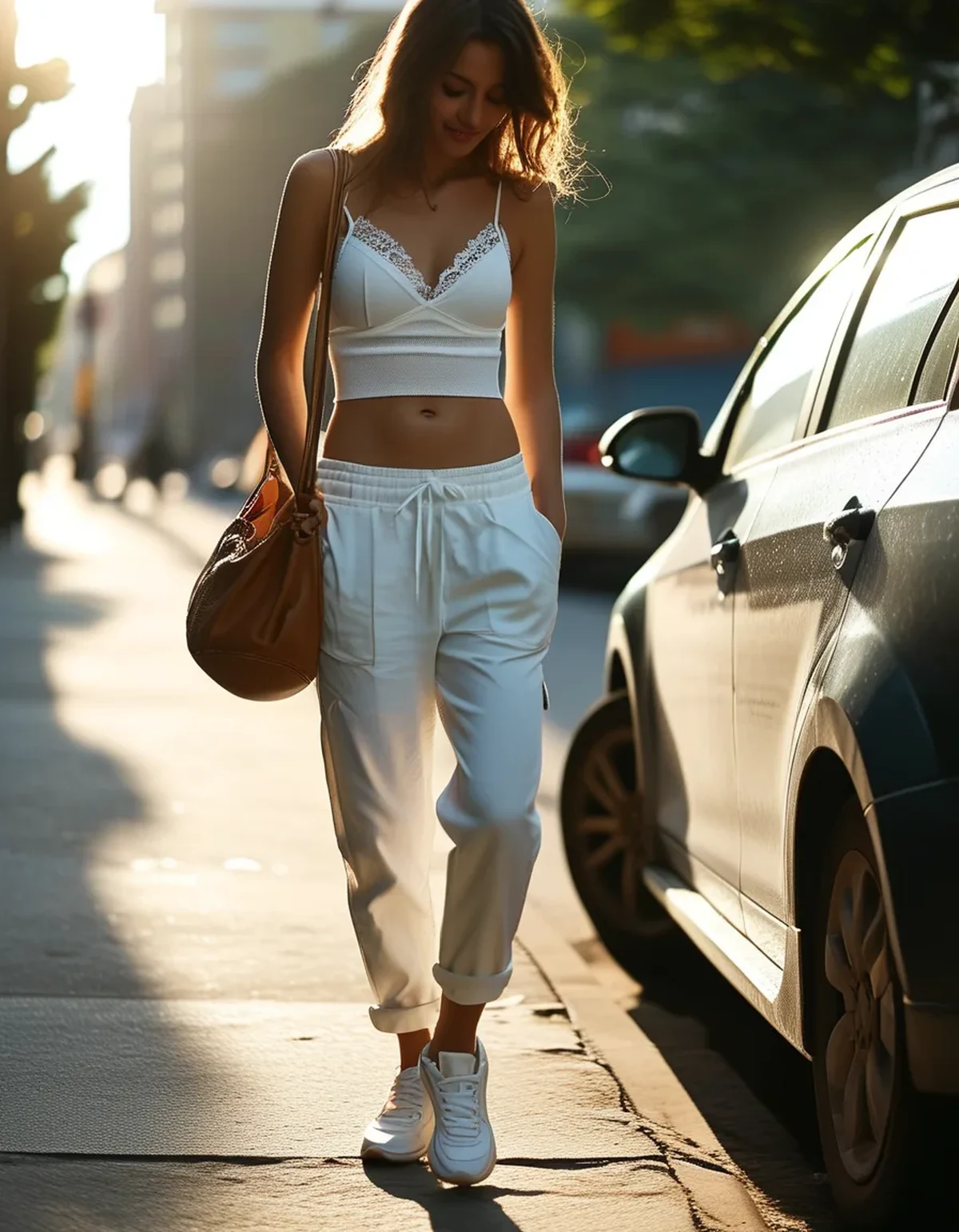
Slim low-profile sneakers. The default. Court-style or minimal runners with a flat, thin sole. Swap the laces for elastic ones and they become genuinely hands-free. White or cream reads polished with almost anything, and they handle a walk into a school office without looking like gym shoes.
Structured loafers. The dressed-up option. Look for a leather or rubber sole with some tread, and a fit snug enough that your heel does not lift. A loafer with a proper heel counter walks far better than people expect. Add a no-show sock with a silicone grip.
Flat ankle boots. The best cold-morning option and about to become relevant. Choose a sub-1-inch heel with a lugged sole. They handle a wet parking lot, a school hallway, and a quick errand afterward, and they slip on without hands if you size them correctly.
Own one of each and the entire question disappears for the year.
Is keeping a spare pair in the car actually worth it?
For most people, no. The car shoe swap sounds efficient and in practice you end up doing it in a driver’s seat with a bag on your lap.
The exception is genuinely useful: keep one pair of flat slip-ons in the footwell behind the passenger seat for the days you have to walk further than expected - a field trip pickup, a parking lot at the far end, an unplanned errand. Not a daily swap, an emergency option.
The better investment is making your main shoe work. If you find yourself wanting to change shoes daily, that is information about the shoe, not about the schedule.
One small thing that pays off immediately: keep a microfiber cloth in the door pocket. Carpool lines are dusty and a 10-second wipe keeps white sneakers looking deliberate rather than neglected.
FAQ: Carpool Shoe Questions, Answered
Are driving shoes with the rubber heel nub worth buying?
They drive beautifully and walk poorly - the sole is too thin and unstructured for pavement. If you drive long distances they are worth owning as a second shoe, not as your carpool shoe.
What about the transition to fall?
Flat ankle boots take over from sneakers roughly when the mornings drop into the 50s. The lugged sole matters more than the insulation for a school run.
How do I keep white sneakers looking good through a school year?
A cloth in the car door, a suede or leather protectant spray at the start of term, and laces replaced once mid-year. Those three cost very little and do most of the work.
TL;DR:
- A carpool shoe needs a thin sole for pedal feel, a firm heel counter for walking, and hands-free entry.
- Thick soles reduce braking control; backless shoes make you shuffle; flip flops can catch under a pedal.
- The three shapes that work: slim low-profile sneakers, structured loafers, flat ankle boots.
- Elastic laces turn any sneaker into a slip-on and save 40 seconds every stop.
- Skip the daily car shoe swap; keep one emergency flat pair in the footwell instead.
As mornings cool, the flat ankle boot quietly becomes the best version of all three requirements at once.
Keep Reading
This article is for general informational and styling purposes only. Fit, sizing, and product availability may vary.