Why Your Carpool Outfit Looks Creased by Pickup - and the Fabrics That Do Not

Quick Answer: Clothes crease in a car because sitting applies sustained pressure and body heat to folded fabric - which is the same combination an iron uses to set a crease deliberately. Cellulose fibres like cotton, linen, and viscose crease hardest because hydrogen bonds in the fibre reform in the folded position. Ponte, jersey knits, wool blends, and anything with 3 to 5 percent elastane recover on their own. The three highest-impact changes are switching your trouser fabric, keeping your seatbelt off the shoulder seam, and hanging rather than folding the layer you take off.
You checked yourself before you left at eight. Everything sat properly. By the time you are in the pickup line at three, your trousers have a horizontal line across the lap, your shirt has folded itself at the waist, and the whole outfit has aged about four hours more than you have.
The culprit is not the clothes being cheap. It is that a car seat is an extremely effective creasing device.

Why does sitting in a car crease clothes so much more than sitting anywhere else?
Because a car seat supplies all three things a professional press needs: pressure, heat, and time.
When you iron a crease into something deliberately, you apply heat and pressure to a fold and hold it. A driver’s seat does exactly this. Your body weight presses the fabric against a contoured surface, your body heat warms it to roughly skin temperature, and you hold that position for twenty to forty minutes at a stretch, several times a day.
The fibre chemistry explains why some fabrics surrender immediately. Cotton, linen, and viscose are cellulose fibres held in shape by hydrogen bonds between molecular chains. Under pressure and warmth - especially with any moisture, including normal skin humidity - those bonds break and reform in the new folded position. The fabric is not temporarily bent; it has been reset.
Synthetics behave differently. Polyester and nylon are thermoplastic, meaning their shape is set at manufacturing temperatures far above anything a car produces. Body heat is nowhere near enough to reset them, so they spring back.
Three car-specific factors make it worse than desk sitting:
Heat. A car interior in late summer sits well above room temperature even after the air conditioning starts, and seat surfaces hold heat longer than the air does.
Moisture. You get into a warm car, you perspire slightly, and damp cellulose fibre creases far more readily than dry.
The seatbelt. A diagonal strap under tension across your torso for the whole journey is a concentrated pressure line, which is why the crease from your shoulder to your opposite hip is often the sharpest one on the whole outfit.
Which fabrics actually survive the school run?
A rough hierarchy, best to worst, for anything you will sit in.
Excellent - recover on their own:
- Ponte knit. A double-knit with elastane, structured enough to read as tailoring and knitted enough that it does not hold a fold. The single best trouser fabric for a day of driving.
- Wool and wool blends. Wool’s natural crimp gives it genuine elastic recovery, which is why suits survive commutes. A wool-blend trouser will look better at 3pm than a cotton one did at 9am.
- Technical blends with 3 to 5 percent elastane. The elastane pulls the fabric back toward its original shape as soon as pressure comes off.
- Jersey knits. Knitted loops distort and reform rather than folding.
Acceptable:
- Polyester and poly blends. Genuinely wrinkle-resistant, with the trade-off that they breathe poorly in a hot car.
- Denim with stretch. Heavy enough to resist and stretchy enough to recover. Rigid denim creases behind the knee and stays creased.
- Tencel and modal. Better than viscose, worse than wool.
Difficult:
- Cotton poplin and cotton twill. Crisp when you leave, folded by mid-morning.
- Viscose and rayon. Drapes beautifully and creases if you look at it.
Worst:
- Linen. It creases as a design feature. If you love it, wear it knowing that, or choose a linen blend with at least 30 percent something else.
- Silk and silk blends. Creases and shows every water mark.
The practical test in a shop: grab a handful of the fabric, squeeze hard for ten seconds, and let go. What you see is roughly what your lap will look like at pickup.
What else can you change without buying anything?
Six adjustments, ordered by how much difference they make.
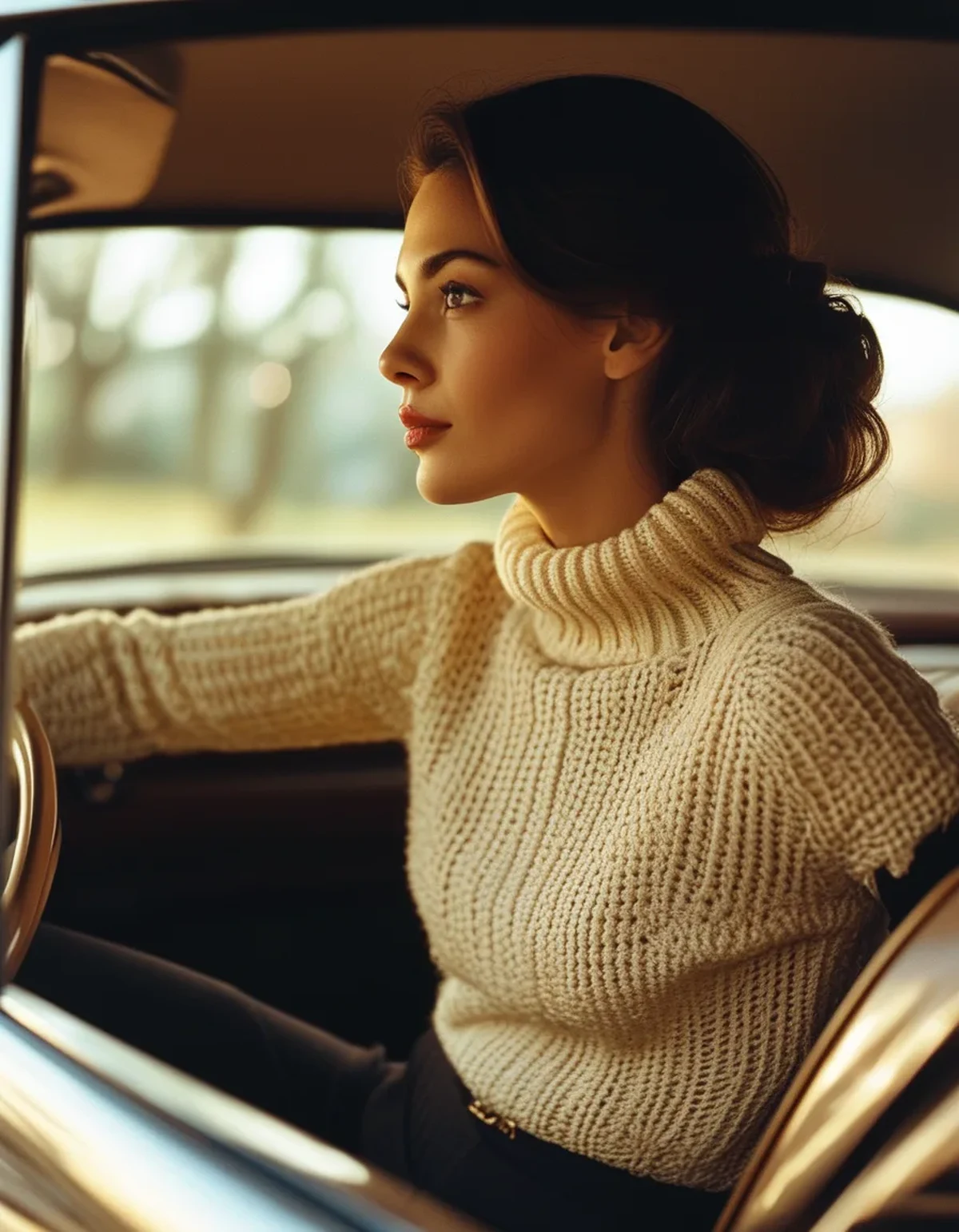
Move the seatbelt off the shoulder seam. The strap sitting directly on a shoulder seam or a collar concentrates pressure exactly where a garment is least able to recover. Adjusting the belt height so it crosses mid-chest rather than at the neck helps the outfit and is safer.
Take the outer layer off before you get in, and hang it. A blazer or structured jacket creases worst of anything because it is cut with defined shape. Twenty seconds to hang it on the back-seat hook is the highest-value habit in the whole list.
Do not sit on the back of your top. Most waist creasing comes from a shirt being pinned under you and pulled. Smooth it behind you as you sit - this alone eliminates the horizontal fold across the lower back.
Cool the car before you get in. Heat plus pressure sets creases; pressure alone mostly does not. A minute with the windows down and the fan on before you set off measurably reduces it, especially on a sunny afternoon.
Choose the darker or the busier one. Creases are a light-and-shadow effect. Navy, charcoal, and any pattern hide them; pale solid colours broadcast them. This is why a light beige cotton trouser is the single worst thing you can wear on a driving day.
Reset in the car, not at home. The two-minute recovery that actually works: stand up, shake the garment out, and let it hang while you walk. Most knit and wool creases fall out of their own accord within ten minutes of the pressure coming off. A quick spritz of water on your fingers smoothed over a cotton crease helps too - water is what lets those hydrogen bonds reform flat.
5 Mistakes Everyone Makes With Car-Friendly Dressing
1. Buying wrinkle-free cotton and expecting it to work. Wrinkle-resistant cotton finishes are real and they wear off. Expect maybe twenty washes of genuine benefit, less with hot water. The structural solution - a knit or a wool blend - does not degrade.
2. Choosing the crisp version of everything. Crisp is what creases. A structured cotton shirt looks sharper in the mirror at eight and worse than a soft knit by noon. If the whole day involves sitting, softness wins on a several-hour view.
3. Wearing the jacket rather than hanging it. Everyone knows this and almost nobody does it, because it costs twenty seconds at each end. It is the difference between a blazer that lasts the day and one that is done by the second stop.
4. Blaming the garment when it is the seat. A heated seat is a small ironing press. If your creasing got noticeably worse in one specific car, check whether the seat heating is on - many cars default it on in cool weather without an obvious indicator.
5. Ignoring what happens under the seatbelt on a hot day. On a warm afternoon, the strap traps heat and moisture against the fabric along its whole length. That is the one crease that will not shake out, and the only real fix is a fabric that resists it or a top that will not show it.
FAQ: Carpool Outfit Questions, Answered
Are there fabrics that look smart but never crease?
Ponte knit and wool-blend crepe come closest. Both read as tailored, both have genuine recovery, and both handle a full day of getting in and out of a car. They cost more than cotton twill and they last considerably longer in appearance terms.
Why does the same top crease some days and not others?
Humidity and heat. Cellulose fibres crease far more readily when warm and slightly damp, so a humid late-summer afternoon produces creasing that the same journey in October will not. It is not the garment aging.
Can I get creases out without an iron?
Often yes. Hang the garment in a steamy bathroom for ten minutes, or lightly mist it with water and smooth it flat with your hands. Water is what allows cellulose bonds to reset, so a light mist plus hanging does most of what an iron does, just slower.
Does a seat cover help?
A smooth fabric or leather-look cover reduces the texture transfer that makes creasing look worse, but it does not change the pressure or the heat. It is a minor improvement compared to changing what you are wearing.
TL;DR:
- A car seat supplies pressure, heat, and time - the same three things an iron uses to set a crease deliberately.
- Cotton, linen, and viscose reset in the folded position. Wool, ponte, jersey, and elastane blends recover on their own.
- The seatbelt line is the sharpest crease on most outfits. Adjust the belt off the shoulder seam.
- Hang the jacket rather than wearing it in the car. Twenty seconds, biggest single improvement.
- Cool the car before you set off - heat is what sets the fold.
- Dark or patterned hides creasing; pale solids broadcast it.
If your morning outfit keeps dying by pickup, the problem is almost never how you got dressed. It is that you have spent two hours being gently pressed, and cotton is very cooperative about that.
Keep Reading
This article is for general informational and styling purposes only. Fit, sizing, and product availability may vary.