The Carpool Outfit Problem Nobody Warns You About: Dark Mornings

Quick Answer: Once drop-off moves into low light, the outfit has one new job: being seen. That means one light or reflective element on a moving part - a light-coloured jacket, a reflective detail on a bag or shoe - plus footwear you can actually walk in on damp ground, and a layer that handles a cold car and a warm classroom corridor. Dark colours read as invisible in headlights, which is a genuine safety issue at a busy drop-off line, not a styling preference.
You’ve had a five-minute morning outfit that worked all summer. It’s black, it’s fine, and in four weeks you’ll be standing in it beside a queue of cars in the dark.
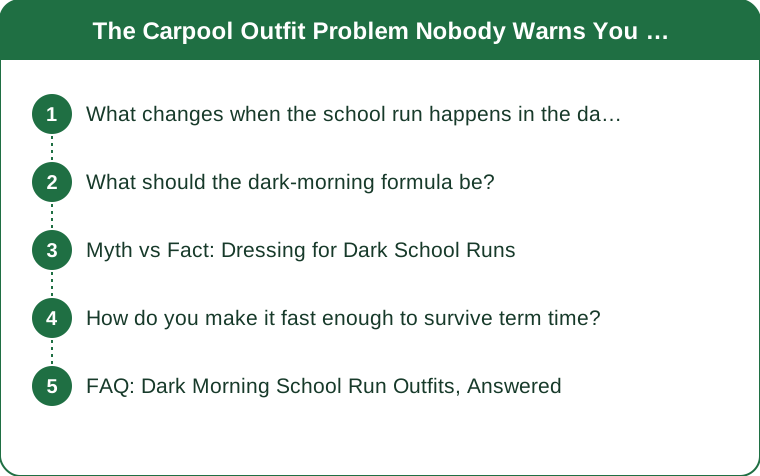
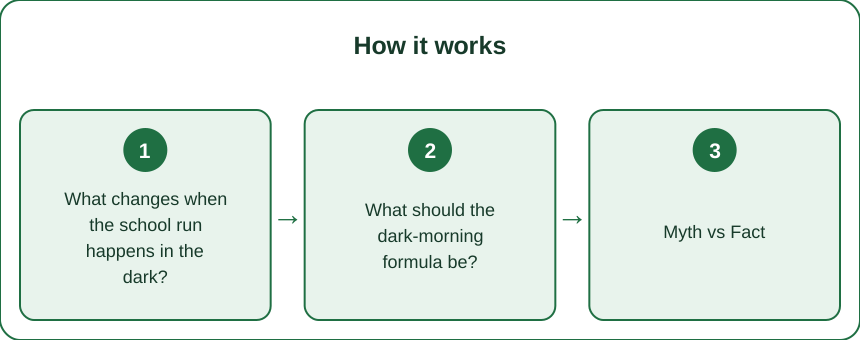
What changes when the school run happens in the dark?
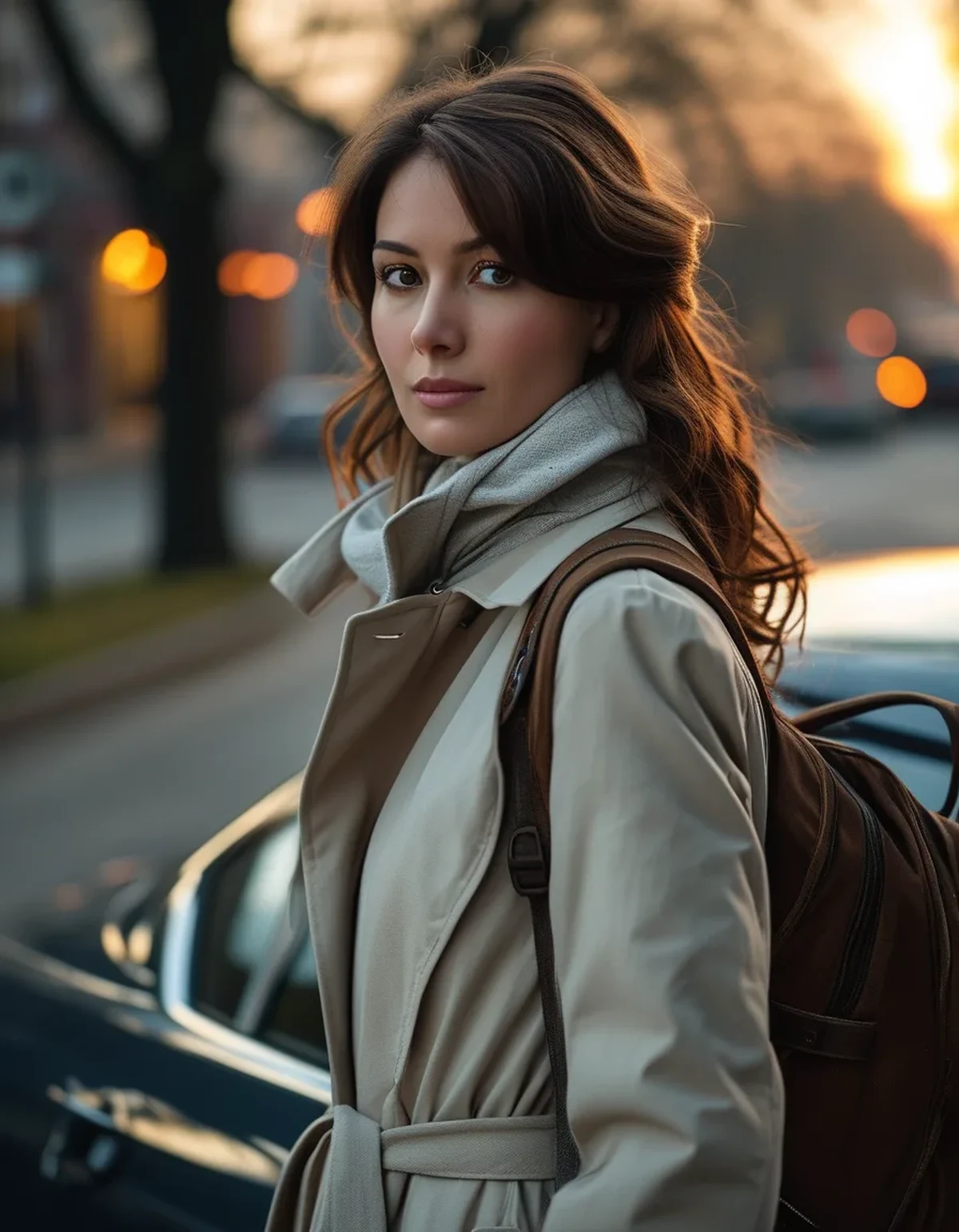
Visibility becomes a real variable. A drop-off line is a slow-moving mix of cars, reversing vehicles, and pedestrians crossing between them. In low light, an all-dark outfit genuinely is harder for a driver to see, and the margins at a busy school gate are small.
Ground conditions change. Wet leaves, damp pavement, and dark patches you can’t see are the autumn version of the school run, and summer sandals or smooth-soled slip-ons stop being adequate.
The temperature gap widens. A cold car at 7:30 and a heated school corridor at 8:00 is a bigger swing than anything summer produced, and it happens in fifteen minutes.
You’re more likely to get out of the car. Dark mornings and wet weather mean walking children closer to the door, which turns a stay-in-the-car outfit into a be-seen-outside outfit.
And you get dressed in the dark too. Choosing an outfit at 6:45 with the lights on and the curtains shut is how mismatched, under-layered outfits happen. Laying it out the night before matters far more from here than it did in July.
The change is gradual and the switch is not. Sunrise moves later by minutes a week, so there’s no obvious day to change your approach - which is why most people are still in the summer formula a month too long.
What should the dark-morning formula be?
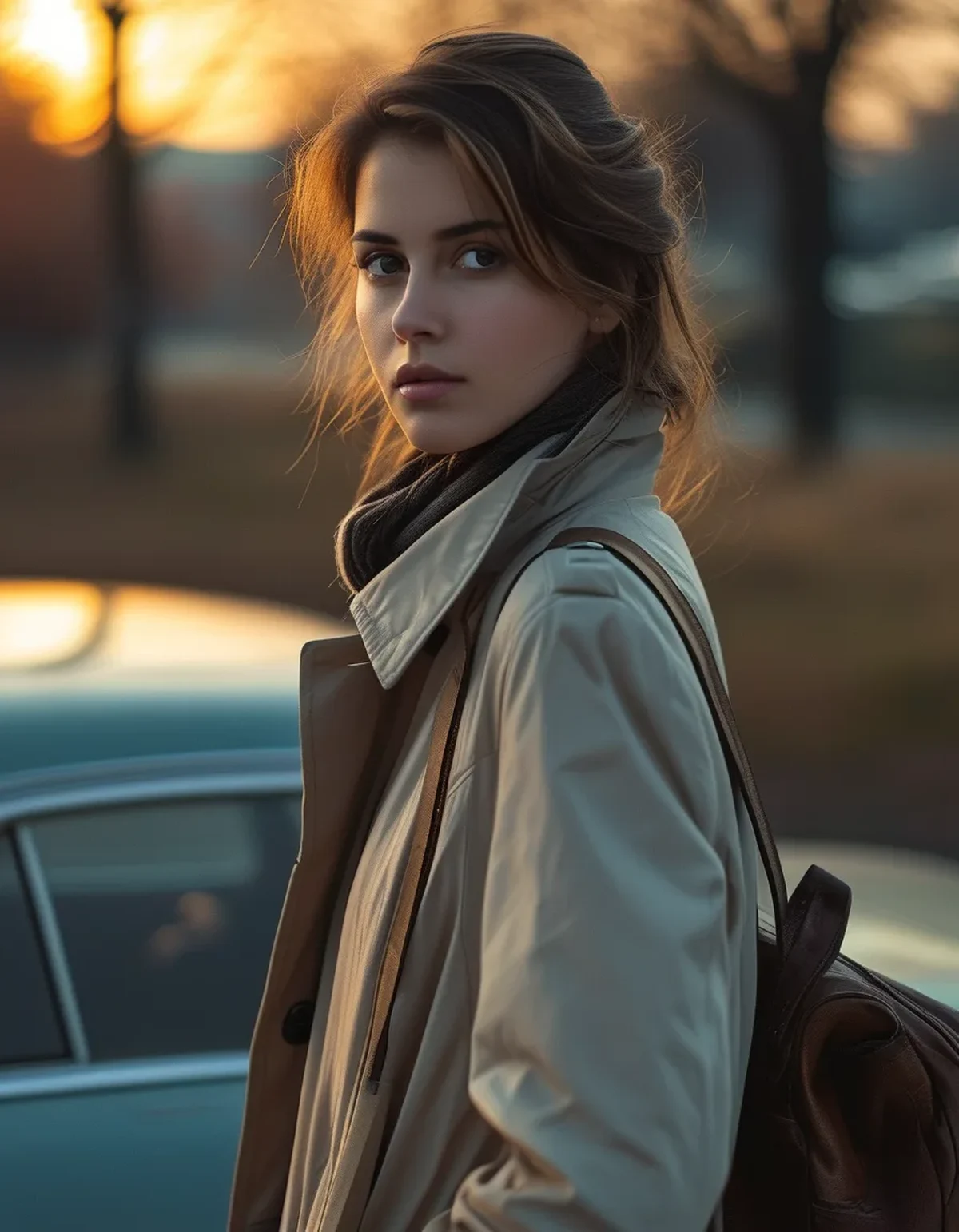
One light or reflective element, on something that moves. A cream or light jacket, a pale scarf, reflective trim on a trainer, or a reflective keyring or strap on the bag you’re carrying. Motion is what catches the eye first, so put the bright thing on an arm, a bag, or a foot.
A layer you can wear in the car and take off inside. A zip-through, a longline cardigan, or a light padded gilet. Something you can remove one-handed while carrying things, which rules out anything you’d have to pull over your head.
Footwear with grip and a closed toe. A low boot, a chunky trainer, or a loafer with a rubber sole. Wet leaves over pavement is genuinely slippery, and the school run involves a lot of quick turning while holding something.
Trousers or a longer length over anything cropped. Standing outside at 7:45 in autumn is a different proposition from standing outside at 8:15 in August, and the extra length costs nothing.
A hood or a hat within reach. Not necessarily worn - just present, so a sudden shower doesn’t force a decision you’ll regret.
And keep the whole thing to three pieces. The formula only survives if it’s fast. Base, layer, shoes, plus one visible element. Anything more elaborate gets abandoned by the second week of term.
Myth vs Fact: Dressing for Dark School Runs
Myth: High-vis is the only way to be seen. Fact: a light-coloured coat, a pale scarf, or reflective detailing on shoes and bags all help substantially, and none of them look like a work vest. Fluorescent works in twilight; reflective works in full dark.
Myth: You’re in the car, so it doesn’t matter. Fact: most school runs involve at least a short walk, and the walk happens in the least visible conditions of the whole trip - between parked cars, in a queue, in low light.
Myth: Black is the practical choice for school-run clothes. Fact: black hides marks brilliantly and hides you as well. One light element solves the visibility problem without abandoning a dark base.
Myth: You need a whole separate autumn wardrobe. Fact: the useful additions are usually a light-coloured outer layer, one pair of grippy closed shoes, and a reflective bag detail. Three items, not a wardrobe.
Myth: It’s only really an issue in deep winter. Fact: the awkward period is now through late autumn, when it’s dark enough to be a problem but not obviously dark enough to prompt anyone to change what they wear.
How do you make it fast enough to survive term time?
Lay it out the night before, in the same place. This single habit does more for morning outfits than any styling advice, and it matters more once you’re dressing in the dark.
Build a five-day rotation rather than deciding daily. Same three-piece formula, five different tops. The decision happens once a week, not five times.
Keep the visible element permanently attached to the bag. A reflective strap or keyring on the bag you always carry means you never have to remember it.
Leave a spare layer in the car. A fleece or a light jacket that lives in the boot handles the mornings you misjudged, and it means you don’t have to dress for the worst case every day.
Choose shoes you can put on standing up. Anything requiring sitting down and lacing is the thing that gets swapped for slip-ons on a rushed morning, which puts you back in a smooth-soled shoe on wet ground.
And check the shoes you wore all summer before you rely on them. Tread wears down invisibly, and autumn is when it starts mattering. This is a two-minute check that prevents the one genuinely bad outcome in this whole article.
FAQ: Dark Morning School Run Outfits, Answered
What should I wear for a school run in the dark?
A dark base is fine, but add one light or reflective element on something that moves - a light jacket, a pale scarf, or reflective trim on your bag or shoes. Add grippy closed footwear and a layer you can remove one-handed indoors.
Do I really need reflective clothing for drop-off?
Not high-vis workwear, but yes to something that catches headlights. Drop-off lines involve reversing cars and people crossing between them in low light, and being visible is a practical safety measure rather than an accessory choice.
How do I handle a cold car and a hot school corridor?
A removable mid-layer with a zip rather than one warm coat. The temperature swing between the two happens in about fifteen minutes, and a single heavy layer is either right for one end or the other.
What shoes work best for autumn school runs?
Closed toe, rubber sole, real tread, and something you can put on standing up. Wet leaves over pavement is the main hazard and it’s completely handled by footwear.
TL;DR:
- Drop-off moves into low light over the next few weeks, and visibility becomes a genuine job for the outfit.
- Put one light or reflective element on something that moves - a jacket, a bag strap, a shoe.
- Use a removable zip layer for the cold car to warm corridor swing, which happens in about fifteen minutes.
- Closed, grippy footwear you can put on standing up handles wet leaves and rushed mornings.
- Lay it out the night before and run a five-day rotation, because a slow formula gets abandoned by week two.
Black hides marks and hides you. One light element fixes the second problem without giving up the first.
Keep Reading
This article is for general informational and styling purposes only. Fit, sizing, and product availability may vary.