The Carpool Outfit That Works for Both Drop-Off and Pick-Up
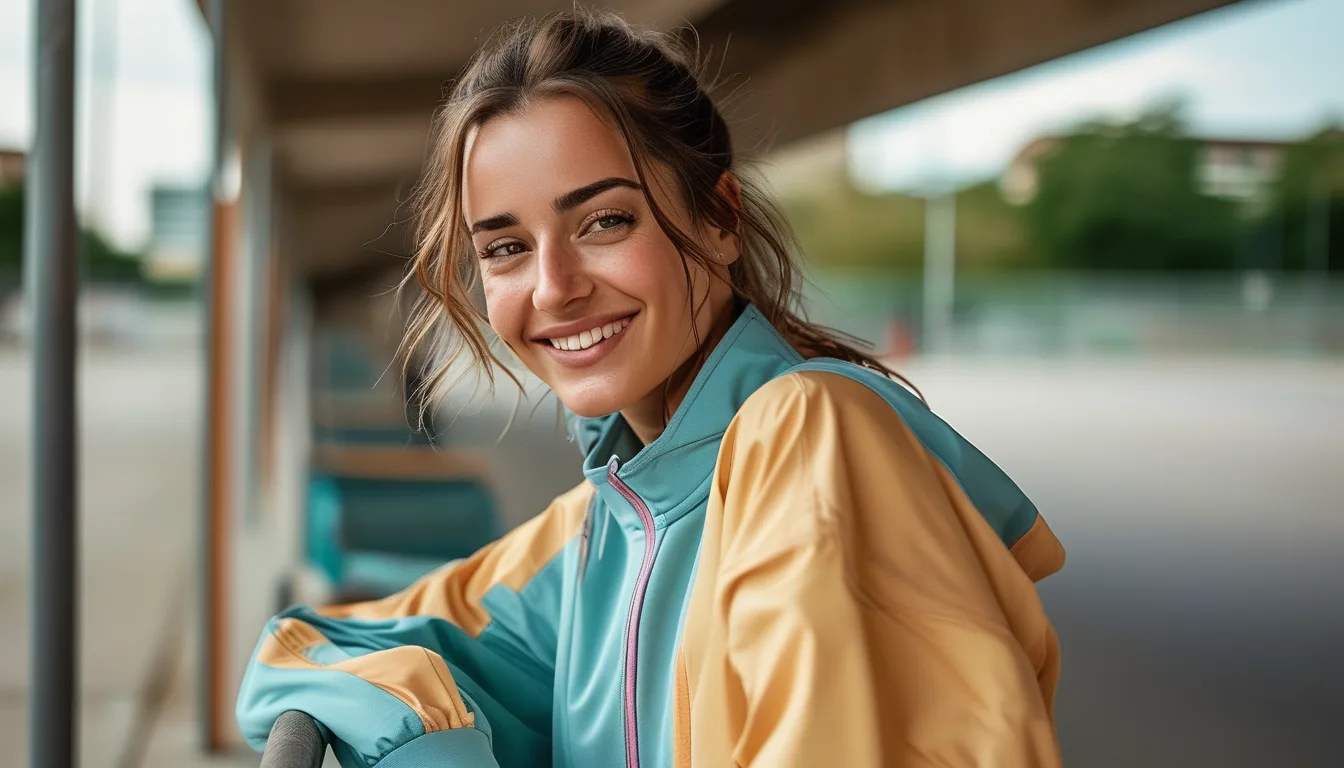
Quick Answer: In September the gap between a 7:45am drop-off and a 3:15pm pick-up commonly runs 8-12C / 15-22F. One outfit cannot be right for both, so build a two-state outfit: a base you would happily wear at the warmest point of the day, plus one removable layer that handles the coldest. Choose the removable layer for how it looks folded over your arm, not just worn.
Morning you are scraping frost off a windscreen. Afternoon you are standing in full sun on hot asphalt in a fleece. The problem is not that you dressed badly. It is that you dressed once for two different days.

How big is the actual temperature swing I am dressing for?
Bigger in September than at any other point in the school year.
Through late summer and early autumn, the atmosphere is drying out. Dry air holds less heat overnight, so it cools further after sunset and warms faster once the sun is high. The result is a wide diurnal swing - commonly 8-12C / 15-22F between early morning and mid-afternoon across much of the US, and more in high desert or mountain areas.
Two other factors amplify what you actually feel. Solar load at pick-up is direct - you are typically standing in an open lot or on a pavement with no shade, and the surface radiates heat back at you, which can add several degrees to perceived temperature. At drop-off you are often in shade or before the sun clears the buildings, which subtracts a few.
And there is a wind factor at drop-off specifically. Mornings often have the calmest air of the day, but stepping out of a warm car into cool still air produces a sharp contrast that reads as much colder than the thermometer says. So the felt swing is usually wider than the forecast swing, which is why forecast-based dressing keeps failing.
What does a two-state outfit actually look like?
A base built for the afternoon, and one layer built for the morning.
The base is the afternoon outfit. Choose it as though the morning did not exist - a short-sleeve or long-sleeve top and bottoms you would be comfortable standing in the sun in. This is the counterintuitive part. Most people build the base for the cold morning and then have nothing to remove that gets them warm enough at 3pm.
The layer is the morning solution, chosen for portability. It needs to do three jobs: add real warmth, come off in one motion, and look deliberate when it is not being worn. That last one eliminates most of what people reach for. A bulky fleece looks fine on and looks like laundry over your arm. A structured overshirt, a lightweight quilted jacket, a long cardigan, or a denim jacket all pass the folded-over-the-arm test.
One optional third element: something that lives in the car. A wrap, a light scarf, or a spare vest in the back seat costs you nothing to carry and covers the days the forecast is wrong. This is more useful than upgrading any single garment, because September forecasts miss by several degrees routinely.
The test for the whole system: could you stand outside comfortably for ten minutes in the morning with the layer on, and ten minutes in the afternoon with it off? If either answer is no, adjust that state independently rather than compromising both.

5 Mistakes That Make the School Run Outfit Fail
1. Building the base for the coldest moment. A heavy base plus a jacket means you are correct at 7:45 and stuck at 3:15, because taking off the jacket still leaves you overdressed. Base for the warm end, layer for the cold end.
2. Choosing a layer that cannot be carried. If it is bulky, needs a hanger, or wrinkles badly when folded, you will keep it on past the point of comfort. The wearability of a layer is only half its job.
3. Shoes chosen for the car rather than the pavement. You may be in the driver’s seat for six minutes and standing on hot or wet ground for fifteen. Slides and backless shoes that work perfectly for a drive-through drop-off are the wrong choice on a day you have to walk to the door.
4. No pockets. Keys, phone, and a mask or a form in your hands while opening a car door is how things get left on car roofs. A layer with real pockets solves a logistics problem, not a style one, and it is the single most underrated feature in a school-run garment.
5. Dressing only for the school run. The carpool outfit is usually also the errand outfit, the work-from-home outfit, and occasionally the unexpected-meeting outfit. A base that can take a blazer or a different layer and read appropriately elsewhere gets far more out of the same twelve minutes of getting dressed.
Which fabrics handle a wide swing best?
The ones that regulate rather than insulate.
Merino wool is genuinely the standout for this specific problem. It buffers temperature in both directions, resists odor across multiple wears, and a lightweight merino long-sleeve works as a base at 12C and does not become unbearable at 24C. It is expensive per piece and cheap per wear.
Cotton jersey and cotton blends are comfortable and breathable but hold moisture, so a cotton base that gets damp in the morning stays cool and clammy for hours. Fine for mild days, poor on cold mornings.
Technical knits with a bit of elastane handle movement well and dry fast, which suits a run that involves lifting bags and buckling children. They can read too sporty for some settings - a matte finish reads far more neutral than a shiny one.
Linen and lightweight woven blends are excellent in the afternoon and useless in a cold morning, so they belong in the base, never as the layer.
For the layer specifically, look for medium weight with a defined shape. A structured cotton overshirt or a light quilted jacket holds a silhouette on and folds compactly off. Unstructured knits do neither well. And a layer in a neutral that matches most of your bases means you make one decision in the morning instead of two.
FAQ: Carpool Style Questions, Answered
How do I look put-together without spending more time in the morning?
Reduce decisions rather than adding steps. A base plus one neutral layer that goes with everything is a two-decision outfit. Keeping the layer and shoes in a fixed spot near the door removes the search. Most of what reads as put-together is fit and cleanliness rather than complexity - a well-fitting plain top under a structured jacket beats a more elaborate outfit assembled in a hurry.
Is it worth keeping a separate outfit for pick-up?
Almost never. The value of the two-state approach is that it removes the need for a second outfit entirely. The exception is if pick-up is immediately followed by an activity with a real dress requirement - a workout, a work meeting - in which case pack for the activity and let the school run be incidental.
What about the mornings when it is genuinely cold and the afternoon is genuinely hot?
That is when the car layer earns its place. Two removable layers - a light one you wear and a heavier one you leave in the car - covers swings above 12C / 22F without changing the base. Add a scarf, which is disproportionately effective at the neck for its weight and packs to nothing.
TL;DR:
- September drop-off to pick-up swings 8-12C / 15-22F, and solar load on asphalt makes the felt swing wider still.
- Build the base for the afternoon, then add one removable layer for the morning.
- Choose the layer for how it looks folded over your arm, and insist on real pockets.
- Merino regulates best; keep a spare wrap or vest in the car for forecast misses.
The carpool line is one of the few places you stand still outdoors twice a day at the two most different temperatures the day produces. Once you stop trying to solve both with a single outfit and start solving them with a base plus one good layer, the whole thing takes about the same twelve minutes and stops being a daily gamble.
Keep Reading
This article is for general informational and styling purposes only. Fit, sizing, and product availability may vary.