The Carpool Outfit Detail Nobody Mentions: Your Seatbelt

Quick Answer: A seatbelt presses a diagonal line across one shoulder and the opposite hip for the entire drive, which creases loose woven fabrics, drags necklines sideways, and rubs a narrow strip of skin raw over time. Choose knits over crisp wovens for driving days, keep the neckline wide enough that the belt sits on fabric rather than skin, and put anything structured on after you park.
You get out at drop-off and there is a crease running from your shoulder to your opposite hip like a sash, your top has migrated three centimetres to the left, and the collar is doing something it was not doing at home. Forty minutes of steady diagonal pressure, twice a day, five days a week. Of course it shows.
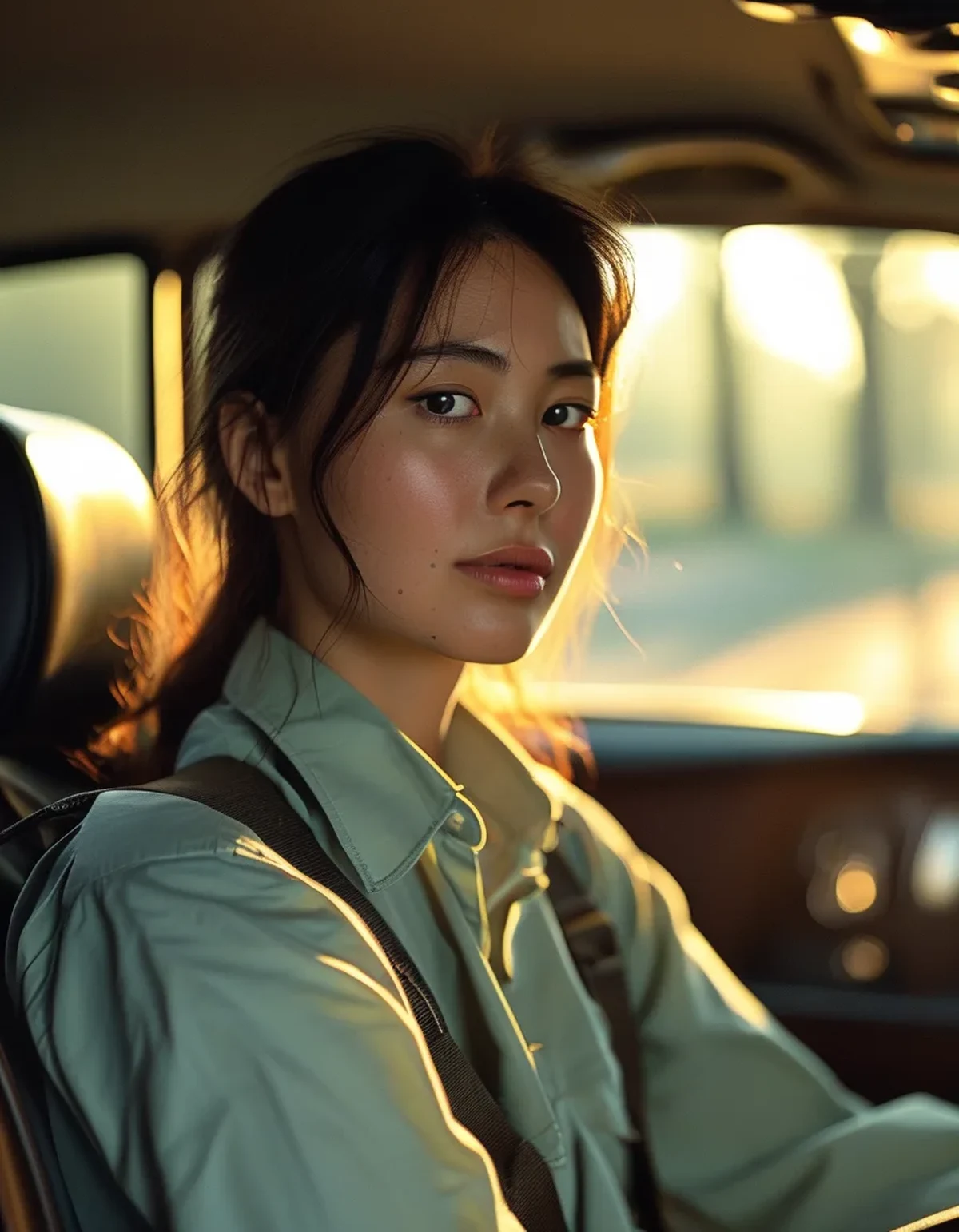
What is the seatbelt actually doing to your outfit?
Three separate things, and they affect different garments in different ways.
It creases along a fixed diagonal. A belt applies continuous light pressure in one line. Crisp woven fabrics - poplin, linen, anything with a smooth flat surface - hold that crease and keep it after you get out. Knits recover almost immediately because the loops spring back. This is the entire reason a jersey top looks fine at 9am and a linen shirt does not.
It drags the garment sideways. Every time you lean forward to check a mirror or reach for something, the belt holds the fabric and your body moves under it. Over a twenty-minute drive that quietly rotates a top a few centimetres, which is why necklines end up off-centre and side seams end up somewhere near the front.
It concentrates pressure on a narrow strip of skin. Where a neckline is wide or a top is strappy, the belt sits directly on skin at the collarbone. Over months of daily driving that produces genuine irritation - a warm, slightly raw line - especially in summer when there is sweat involved.
And it flattens whatever is underneath. A structured jacket, a puffer, a scarf, or a stiff collar all get compressed into a permanent shape along that line. The fix for most of that is simply putting the structured layer on after you park, which almost nobody does because the car is where it is warmest.
What should you actually wear for a driving day?
The principle is knits and recovery, with structure saved for after the engine goes off.
Fabrics that survive the belt:
- Ponte, jersey, and interlock knits - they recover from creasing within a minute of standing up
- Anything with 3 to 5 percent elastane - the recovery is the point, not the stretch
- Textured surfaces - ribbing, waffle, bouclé - because a texture hides a crease that a smooth surface displays
- Mid-weight over lightweight - very fine fabrics crease hardest
Fabrics to avoid before 9am:
- Linen and linen blends, which crease if you look at them
- Crisp cotton poplin and shirting
- Silk and satin, which mark from pressure as well as crease
- Anything with a pressed pleat you care about
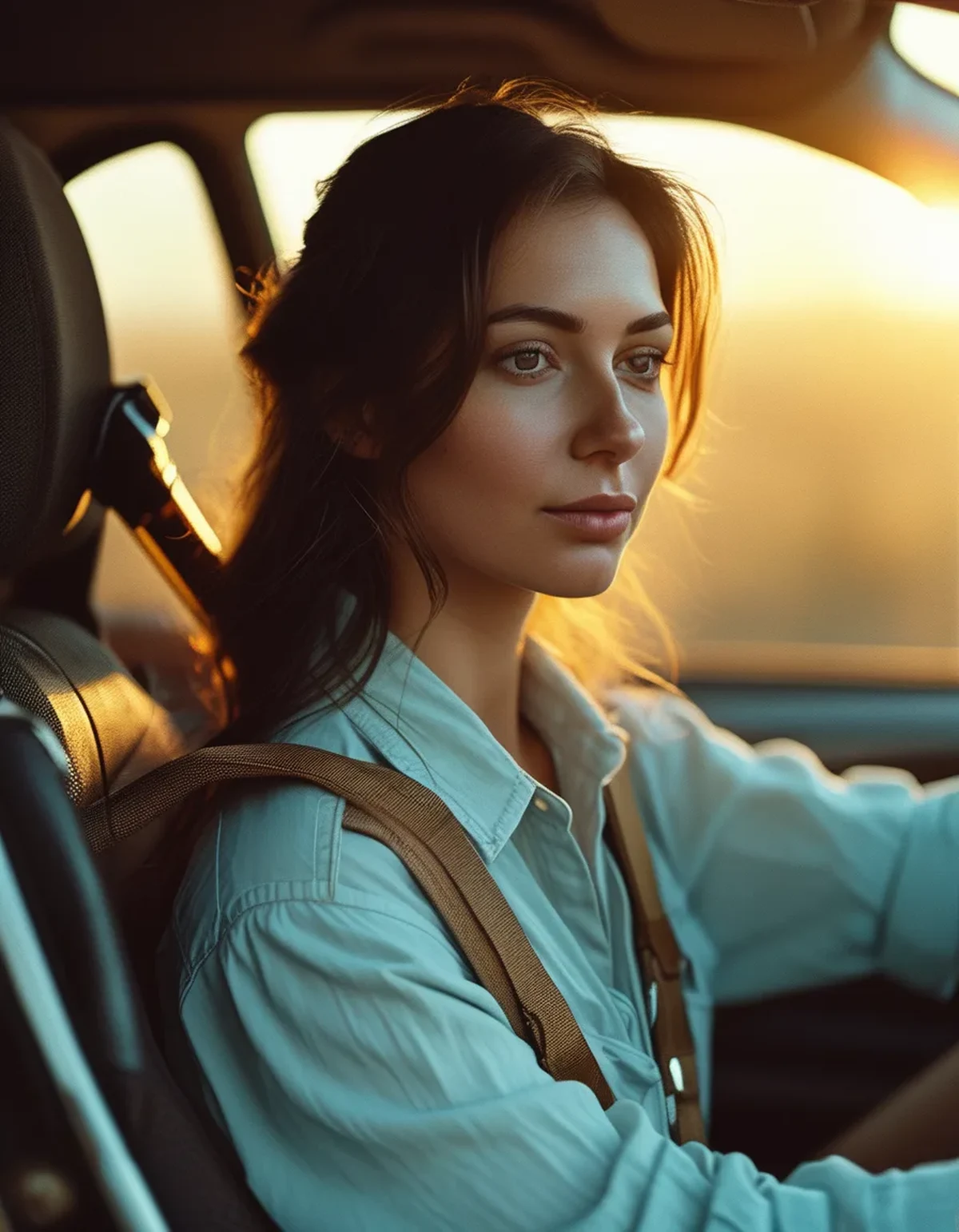
Neckline matters more than you would think. A crew or high scoop puts fabric between the belt and your collarbone. A narrow strappy top or a wide off-shoulder neckline puts the webbing directly on skin, which is the version that produces irritation over time.
And build the outfit in two layers. The base layer is what you drive in - knit, comfortable, belt-proof. The second layer - blazer, structured jacket, scarf - goes on when you get out, if you get out. It takes eight seconds and it solves the crease problem completely for the one garment that shows creasing worst.
5 Mistakes Everyone Makes on the School Run
1. Wearing the structured layer while driving. A blazer under a belt for twenty minutes has a compression line across the lapel and shoulder that will not fall out until it is hung up for a day. Put it on at the car door.
2. Tucking a top in before you drive. The belt drags the fabric and the tuck pulls out asymmetrically, which looks considerably worse than never having tucked at all. Tuck after you park.
3. Long necklaces and driving. A pendant on a long chain sits exactly where the belt crosses, gets pressed into your sternum, and frequently ends up caught. Short chains or nothing.
4. Ignoring the belt height adjuster. Almost every car has a slider on the B-pillar that moves the shoulder anchor up or down, and almost nobody has ever touched it. Setting it so the belt crosses the middle of your collarbone rather than the side of your neck fixes both the rubbing and a good deal of the fabric drag. This is the one that takes ten seconds and nobody knows exists.
5. Assuming you are not getting out. You are. There will be a form to sign, a forgotten lunchbox, or a conversation in the car park. The outfit that only works from the driver’s seat is the one that fails on the day it matters.
What about the temperature problem?
Late August in a car is its own climate. The morning is cool, the car has been in the sun, the air conditioning is aggressive, and the afternoon pickup is a different season from the morning drop-off.
Dress for the cold car, not the warm one. Air conditioning in a car is directional and lands on your arms and shoulders. A light long-sleeve knit that you can push up is more useful than a sleeveless top with a cardigan you cannot put on while driving.
Keep one layer permanently in the car. A lightweight zip-up or a large scarf that lives on the passenger seat solves both the cold morning and the over-air-conditioned afternoon. It also covers a creased top if the day turns into something more than drop-off.
Watch the seat contact points. In heat, the belt strip and the seat back are where you sweat, and a top that shows moisture - grey marl above all - shows it exactly there. Darker colours, patterns, and textured knits are far more forgiving.
Shoes are a separate decision from the outfit. Pedals need a flat, secure sole with no loose back. If the shoes you want to wear are not drivable, keep them in the footwell and change at the destination - which is easier and faster than most people expect, and considerably safer than driving in a backless slide.
And check the back of the outfit before you leave the house. You will be seen from behind at the car door, at the gate, and walking back. The seatbelt crease shows most clearly across the back shoulder, which is the one part of the outfit you never see in a mirror.
FAQ: Carpool Outfit Questions, Answered
How do you stop a seatbelt from wrinkling your clothes?
Wear knits with a little elastane rather than crisp wovens, and put structured layers on after you park. Textured fabrics hide creasing that smooth ones display.
Why does my seatbelt rub my neck?
The shoulder anchor is set too high for your height. Nearly all cars have a slider on the pillar beside your seat - lowering it so the belt crosses mid-collarbone fixes it.
What should you wear for the school run?
A belt-friendly knit base you can drive in comfortably, one extra layer kept in the car for temperature swings, flat secure shoes for the pedals, and any structure added at the door rather than in the seat.
TL;DR:
- The belt creases, drags, and compresses along one diagonal for the whole drive.
- Knits with a little elastane recover; linen, poplin, and silk keep the mark.
- Adjust the shoulder anchor on the pillar - it fixes both rubbing and fabric drag.
- Put blazers, scarves, and tucks in place after you park, not before.
The outfit was never the problem. It was forty minutes under a strap you never thought to account for.
Keep Reading
This article is for general informational and styling purposes only. Fit, sizing, and product availability may vary.